

Abstract:
I will survey on the Kervaire invariant problem and discuss the recent solution of the final case in dimension 126, joint work with W. Lin and G. Wang.
Introduction:
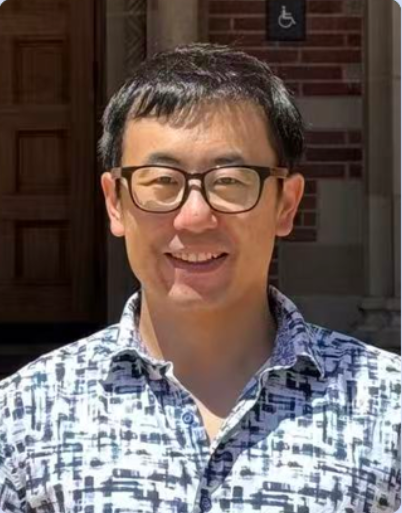
Zhouli Xu is a Professor of Mathematics at the University of California, Los Angeles. His research specializes in algebraic topology, particularly focusing on classical, motivic, and equivariant stable homotopy groups of spheres, with connections to algebraic geometry and geometric topology.
His distinguished honors include being elected a Fellow of the American Mathematical Society (2023), receiving the K-Theory Prize for mathematicians under 35 (2022), and being an invited speaker at the International Congress of Mathematicians (2022). He has also been recognized with multiple ICCM Best Paper Awards (2018, 2023, 2025), Frontiers of Science Awards (2023, 2024), an AMS Centennial Research Fellowship (2025-2026), and ICCM Silver Medal of Mathematics (2025). He has published multiple articles in Annals of Mathematics, Acta Mathematica, Publications Mathématiques de l'IHÉS, and Inventiones Mathematicae.
Abstract:
L-functions associated with automorphic representations generalize the Riemann zeta function and the Dirichlet L-functions. They are central objects in the arithmetic Langlands program. The emerging relative Langlands program predicts deep links between periods of automorphic forms and special values of automorphic L-functions. After introducing these objects and reviewing their construction in some basic cases, we will describe some situations where such links have been established in recent years.
Introduction:
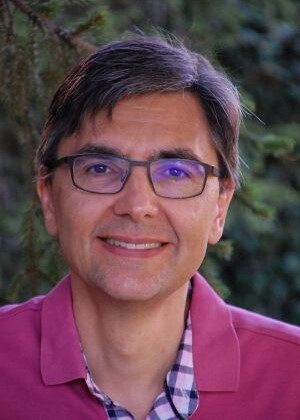
Pierre-Henri Chaudouard is Professor at Université Paris Cité and a Senior Member of the Institut Universitaire de France. His research lies in automorphic forms and the Langlands program, with a particular focus on Arthur–Selberg trace formulas, relative trace formulas, and their applications to Langlands functoriality, the Gan–Gross–Prasad program, and the geometry of moduli spaces of Higgs bundles. He is well known for his joint work with Gérard Laumon on Arthur's weighted fundamental lemma, and for important contributions to the Gan–Gross–Prasad conjectures for unitary groups. He has won the Compositio Mathematica Prize.
Abstract:
Tate discovered that there is no 2\pi i in C_p. This lead Fontaine to construct a ring B_{dR} that contains the p-adic periods of algebraic varieties as was proven in the years 1985-2010. I will give an overview of the fascinating properties of this ring, and explain what we know about periods of analytic varieties.
Introduction:
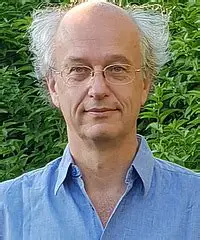
Professor Pierre Colmez is a Directeur de recherche at CNRS, affiliated with the Jussieu Institut of Mathematics, Sorbonne University. He received his PhD in mathematics from the University of Grenoble in 1988, under the guidance of John Coates and Jean-Marc Fontaine. He is a leading expert in p-adic Hodge theory, Iwasawa theory, and the p-adic Langlands program. His construction of the p-adic local Langlands correspondence for GL_2(Qp) is a landmark contribution to modern number theory.
Professor Colmez was an invited speaker at the ICM in 1998 and the ECM in 2012, and has received several major honors, including the Prix Gabrielle Sand et Guido Triossi (1999), Fermat Prize (2005), and Prix Léonid Frank (2016). He is a member of the Academy of Europe (2020).
Abstract:
This is an expository lecture where I plan to discuss various problems surrounding Calabi's program on the existence problem of extremal K\"ahler metrics with singularities.
Introduction:
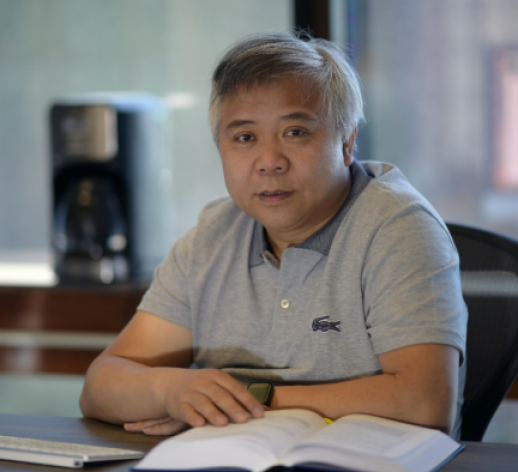
Professor Xiuxiong Chen, the founding director of the Institute of Geometry and Physics, University of Science and Technology of China. He graduated from the University of Pennsylvania and studied under the famous geometer Eugenio Calabi. In 2002, he was invited to give a 45-minute lecture at the International Congress of Mathematicians. In November 2018, he won the Veblen Prize of the American Mathematical Society. In June 2019, he won the Simmons Investigator Award.
Abstract:
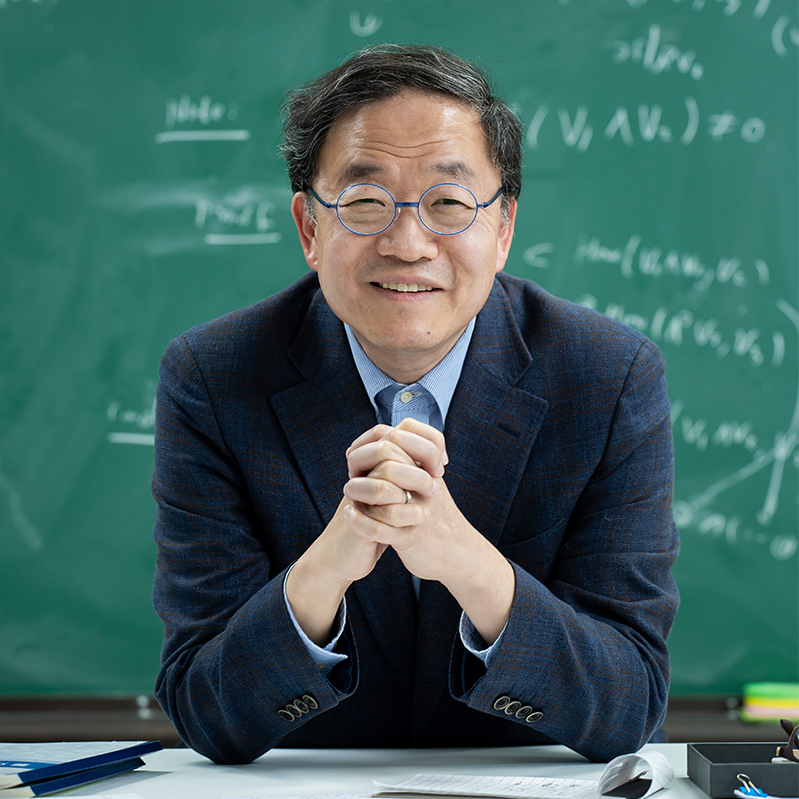
When a complex surface X admits a nowhere vanishing holomorphic 2-form, it determines a (holomorphic) symplectic structure on X. We study the symplectic geometry of such a symplectic structure when X is an elliptic surface. When the elliptic fibration is nonisotrivial, we define a factorization of Kodaira's functional invariant, which determines the symplectic geometry of a nonisotrivial elliptic fibration. This leads to a classification of isogenies of nonisotrivial symplectic elliptic fibrations with a fixed source. We also classify isogenies of symplectic elliptic fibrations with a fixed target in terms of germs of singular fibers.
As an application, we prove that a symplecto-biholomorphic map between germs of fibers of nonisotrivial elliptic K3 surfaces can be extended to compositions of isogenies of K3 surfaces. This is a joint work with Guolei Zhong.
Introduction:
Jun-Muk Hwang is the founding director of the Center for Complex Geometry at the Institute for Basic Science (IBS) in Korea, established in September 2020. He received the Korea Science Prize in 2001 and the Ho-Am Prize in 2009. He was an invited speaker at the ICM2006 and a plenary speaker at ICM 2014.
Hwang's research focuses primarily on complex algebraic geometry, with a particular emphasis on using the theory of rational curves to study the geometry and classification of projective algebraic varieties. His work has profoundly revealed the intrinsic relationships among Fano varieties, homogeneous manifolds, and projective varieties with a rich structure of rational curves. Hwang's work combines geometric intuition with algebraic rigor. His achievements have not only advanced the field of complex geometry but also deeply intersected with representation theory, differential geometry, and mathematical physics. As a leading figure in Korean complex geometry, he has cultivated an active research team, making the Center for Complex Geometry a major international hub in this field.
Abstract
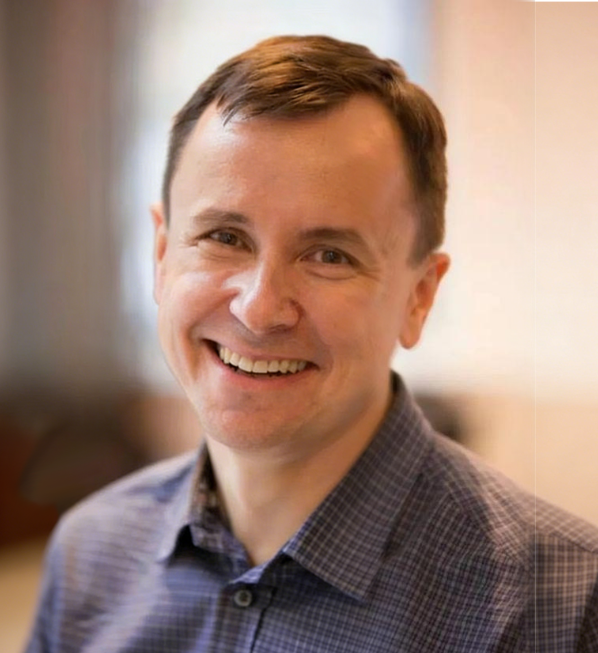
Enumerative geometers and their colleagues in representation theory and mathematical physics are very excited about the new perspectives on old and new problems offered by the nascent field of 3-dimensional mirror symmetry. While most formulations or explanations of what 3-dimensional mirror symmetry is require a lot of prerequisites and a high level of abstraction, some of its core predictions can be easily cast in the language that people like P.L. Chebyshev, C.G. Jacobi, and I.G. Macdonald would have no problem grasping. This is what I will try to do in this talk, which I hope will be accessible to the general mathematical audience.
Biography
Professor Andrei Okounkov, born in Moscow, Russia, is a world-renowned mathematician, who works on representation theory and its applications to algebraic geometry, mathematical physics, probability theory and special functions.
He obtained his PhD from Lomonosov Moscow State University in 1995, under the supervision of Alexandre Kirillov. Since then he held professorships at world-leading academic institutions including the University of California, Berkeley, the University of Chicago, and Princeton University. He is now Samuel Eilenberg Professor of Mathematics at Columbia University.
Professor Okounkov is a member of the US National Academy of Sciences (2012), the American Academy of Arts and Sciences (2016), the Royal Swedish Academy of Sciences, and was elected as a Foreign Member of the Chinese Academy of Sciences in 2023.
Professor Okounkov received many important prizes including European Mathematical Society Prize (2004), and the Fields Medal (2006). He is a ICM Plenary speaker in 2018.